Wild, Marco Rossi avoid holdout after signing 3-year contract
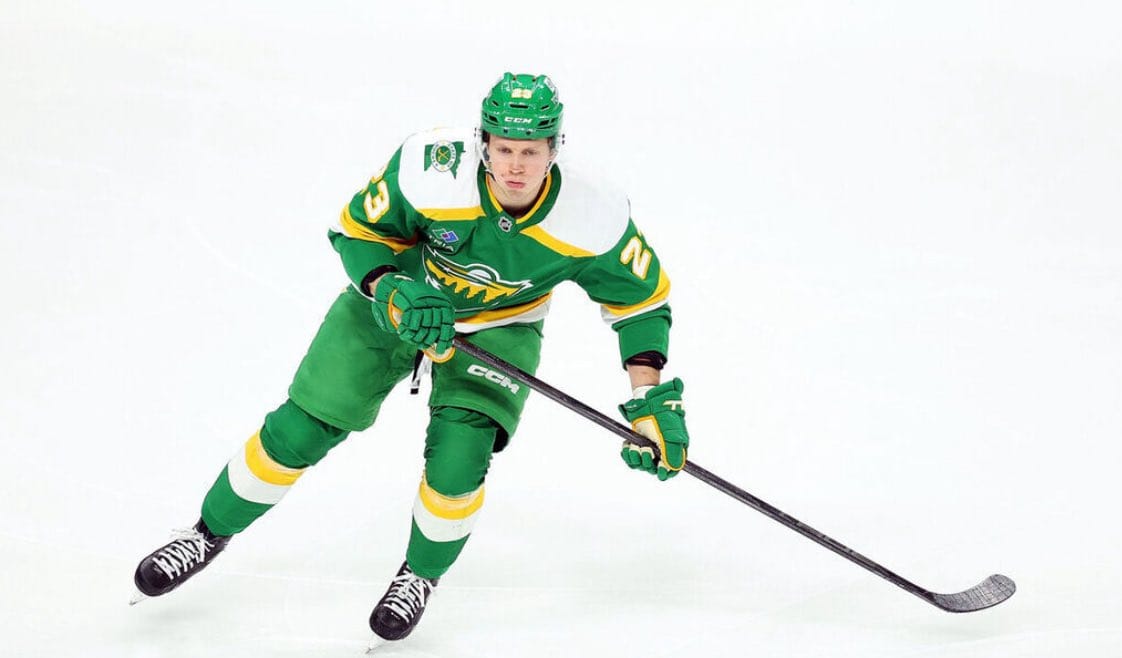
After a summer-long stalemate, the former 9th overall pick in the 2020 draft signed with the team that drafted him. Marco Rossi and the Minnesota Wild agreed to terms on a new three-year contract. This bridge deal carries an AAV of 5 million dollars and will take him into his age-27 season.
It was a strange compromise. You would think that a skater of Rossi's caliber would have teams falling over themselves to sign him to a long-term contract. Not just his current club, but other potentially interested teams via trade.
Marco Rossi had put together a strong 2024-25 campaign, setting career highs in both goals and total points. The Austrian-born skater ended the year potting 24 goals and accumulating 60 total points. If we take a closer look at 5v5, Rossi tied for first with 14 goals and 2nd with 35 total points.
here's 5 and a half minutes of our favorite Marco Rossi goals pic.twitter.com/mXvNJ9A3Wz
— Minnesota Wild (@mnwild) August 22, 2025
Rossi is a highly talented skater and will likely take another step with the Wild next season. So, with all that being said, why did it take so long for the team and the player to get a deal done? And why weren't other teams tripping over themselves to make a trade for him?
Rossi's first Stanley Cup playoffs
Marco Rossi is an undersized forward, but he has put in the work during the offseason to fill out his frame. Not only that, but he has also come a long way since dealing with a long-term illness that hindered the start of his NHL career. Rossi has proven that he belongs in the NHL and has the makings of a star player.
Still, at 5'9, Rossi is one of the smallest centermen in the entire NHL, especially ones who play in a top-six role. Plenty of hockey analysts like to insist that size doesn't matter when playing in the NHL. However, there are many aspects to the game beyond simply scoring points and goals.
During the Wild's opening round series against the Vegas Golden Knights, it felt like Minnesota's coaching staff was hesitant to play Rossi. He averaged 11:08 in ice time and got shuffled up and down the lineup. Despite the lack of ice time, Rossi did find ways to score. He ended the six-game series with two goals and one assist.
After looking back at that series to see why the coaching staff didn't quite trust Rossi to play crucial minutes, one thing stuck out to me. The Golden Knights' size and physicality hindered Rossi's ability to make an impact. Vegas' head coach Bruce Cassidy tasked Nicolas Roy with matching up against Rossi. Roy is a 6'4 centerman who isn't flashy but has the size and strength to win puck battles and clear out space in front of the net.
It seemed to have taken a toll not just on the ice with Rossi, but psychologically in the minds of the Wild's coaching staff and front office. This attitude continued into the off-season negotiations between the two parties.
Does size REALLY matter?
The NHL is a copycat league, so when teams win a Stanley Cup, the other 31 GM's try to replicate their success. Looking back at the past three winners of the Stanley Cup, two in a row by Florida and one by Vegas, you notice a pattern with their roster construction.
The average size of the centerman on the Panthers' past two Stanley Cup-winning teams is 6'2. The previous champion, the Vegas Golden Knights, didn't have a center under 6'0. And while there have been other Stanley Cup-winning teams with undersized centers over the past five years, it has obviously played a factor in how these teams perform in a playoff environment.
Of course, skaters can't just be tall and physical to be effective; they also need to have skills on and off the puck to compete in the NHL. However, size and strength are key factors when it comes to battling for positioning, especially in net front areas and along the boards.
Goals are scarce in the playoffs, which makes skaters who can screen a goalkeeper incredibly valuable. With many teams leaning towards taller goalies who use their size to look over net front traffic, smaller skaters need to work that much harder to be effective. It's not an impossible task, but players of Rossi's stature need to do that much more to earn their space in front of the net.
Does Rossi still fit into the Wild's plans?
The Wild aren't overly convinced that Rossi is a part of their long-term future. If they were, they would have signed the 23-year-old to a deal longer than three years.
Marco Rossi is a highly talented player and is capable of playing in any team's top six. But like many teams, Wild GM Bill Guerin is focused on building a Stanley Cup-contending roster. For years now, Minnesota has been searching for another top-six center to tandem with Joel Eriksson Ek. The team is not convinced that Rossi is in their long-term plans at center. So, where does that leave Rossi, the former 9th overall pick?
The team has already locked in Matt Boldy for the long term, and they're committed to signing Kirill Kaprizov to a contract extension. Those are two left-handed shots on the wing. If the team doesn't envision Rossi as a solution at center, it's tough to find him a spot in the Wild's top-six or the power play in the future.
I believe in Rossi's talent and am confident that he can become one of the more productive skaters in the NHL. Still, I can see why GM Bill Guerin is hesitant to commit long-term to the forward.
With a newly signed 3-year deal, Rossi has plenty of time to find a lane on the Wild's roster. But as of right now, this relationship isn't on firm ground. Minnesota needs to make waves this season for the sake of its future with Kirill Kaprizov and the front office. It'll be interesting to see how well this team will do in a very competitive central division.